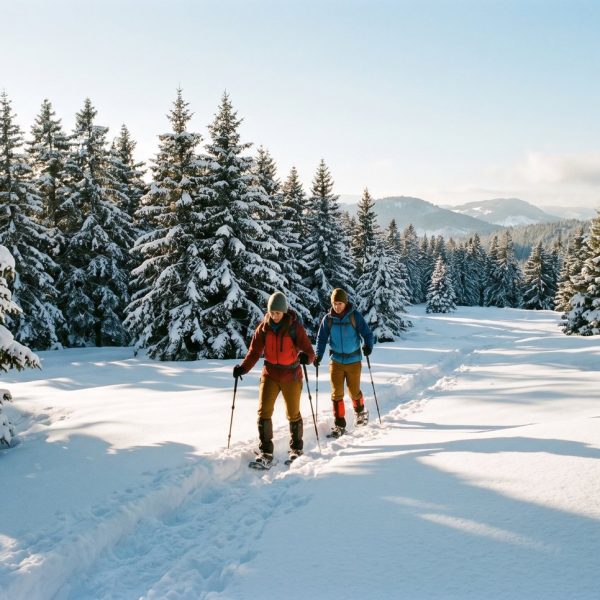
Not everyone who heads to the French mountains in winter wants to ski. Some visitors want quiet forests, frozen meadows and a picnic with a view, without lift queues or rental boots that pinch. That is exactly what snowshoeing in France offers. It is one of the easiest winter sports to pick up, it costs very little, and the country has hundreds of marked trails from the Jura to the Pyrenees. If you can walk, you can snowshoe, and after a morning on the trails most beginners wonder why they waited so long.
Why Snowshoeing Suits Beginners
A modern snowshoe is a light aluminium or plastic frame that spreads your weight over a larger surface, so you float on soft snow rather than sinking to your knees. Crampon teeth under the foot grip on icy patches, and many models have a heel riser that makes climbing far less tiring. There is no real technique to master on gentle terrain. You walk with a slightly wider stance than usual, and poles help with balance on slopes.
Because the pace is relaxed, snowshoeing works well for mixed groups. Grandparents, teenagers and the friend who has never seen deep snow can all enjoy the same outing, and children as young as five or six can manage short loops with small snowshoes.
Where to Go Snowshoeing in France
The French call it randonnée en raquettes, and most Nordic areas maintain dedicated snowshoe routes alongside their cross country ski tracks. A few regions stand out for beginners:
The Jura has rolling plateaus, spruce forests and reliable snow at altitude, with easy loops around Les Rousses and the Haut-Doubs. The Vercors, south west of Grenoble, mixes wide open high plateaus with dramatic limestone cliffs, and the Autrans and Méaudre area is ideal for first timers. In the Massif Central, the volcanic landscapes of the Auvergne feel wild and empty in winter, while the Pyrenees offer quieter valleys and sunny southern slopes. The bigger Alpine resorts also have marked snowshoe trails, often starting right from the village.
Snowshoe trails are usually free to use, although some Nordic areas ask for a small contribution. Look for signposts with a snowshoe pictogram and colour coded difficulty, similar to ski runs. Stay off groomed cross country tracks, because footprints damage the carefully prepared surface and skiers will not thank you for it.
What to Wear and What to Rent
Rental shops in every Nordic resort hire snowshoes and poles for a modest daily fee, so there is no need to buy before your first trip. Ask the shop to fit the bindings to your boots before you leave, because adjusting straps with cold fingers on a windy trail is nobody's idea of fun.
Waterproof hiking boots are perfect; ski boots are not. Dress in layers you can shed as you warm up, because snowshoeing is more energetic than it looks: a thermal base layer, a fleece and a breathable shell jacket work well. Add gaiters to keep snow out of your boots, gloves with a spare pair in your rucksack, sunglasses or goggles, and high factor sunscreen, since the sun reflects strongly off snow at altitude.
Snowshoeing Safety in the Mountains
On marked, maintained trails in Nordic areas the risks are low, but conditions in the mountains change quickly. Check the weather forecast and the local trail report before setting out, and tell someone where you are going. Days are short in midwinter, so plan to be back well before dark.
Leaving the marked routes is a different matter. Off-trail snowshoeing in steeper terrain carries real avalanche risk, and should only be done with an avalanche transceiver, shovel and probe, the knowledge to use them, or better still a qualified mountain guide. Many tourist offices run guided outings, including popular evening walks under the stars followed by a cheese fondue in a mountain hut, which are a wonderful introduction.
Tips for Your First Day on Snowshoes
Start with a loop of five to eight kilometres on gentle terrain. That might sound short, but walking on snow uses more energy than walking on a path, and it is better to finish wanting more. Take regular sips of water and a snack, adjust your poles shorter for climbs and longer for descents, and lean back slightly when going downhill, letting the heels of the snowshoes dig in.
A few words of French go a long way in small mountain villages, where rental staff and refuge keepers may speak limited English. If you are curious about the local accents you will hear, this guide to the languages of France and its regional dialects is a fascinating read before your trip. And if you are weighing a French winter break against a North American one, it is worth reading about a ski lodge getaway in Colorado for comparison.
For trail reports, gear advice and photos from fellow enthusiasts, the snowshoeing community on Reddit is friendly and full of practical tips.
A Gentle Way Into the Winter Mountains
Snowshoeing strips winter travel back to its simplest pleasures: fresh air, crunching snow, silent forests and a hot chocolate at the end. For beginners in France it is affordable, sociable and surprisingly rewarding, and it pairs perfectly with a day or two of cross country skiing if you want to try both during the same holiday.